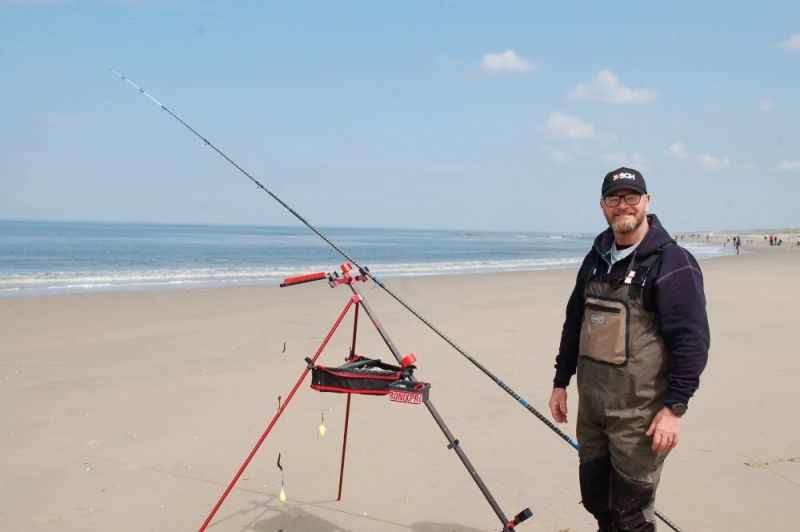
The 2026 European Championships, hosted by EFSA Holland, returned to the famous beaches of Noordwijk for another highly anticipated international event.
The team began their journey on Monday 4th May, travelling to Harwich before taking the ferry across to Hook of Holland. Following a short 40-minute drive, the squad arrived at their accommodation at Puik en Duin Holiday House, located just a stone’s throw from the championship match beaches.
Preparations for the event were immediately met with challenging conditions. The first official practice session proved extremely difficult due to a significant algae bloom affecting the waters at Noordwijk. During the session, the team were joined by EFSA Germany, who had already been fishing the venue for the previous three days. Their reports were far from encouraging, with not a single fish landed because of the heavy algae present in the water. Unfortunately, the team experienced the same difficulties, ending the opening practice day without a fish.
Following discussions with organisers Miranda and Clarinda, concerns remained regarding the condition of the match beaches. However, hopes were high that stronger tides and increased winds would help disperse the algae bloom further out to sea before the competition commenced.
For the second practice session, competitors were advised to fish approximately ten miles further down the coast. This proved to be a much more productive decision, with significantly less algae present and several fish landed between the team members.
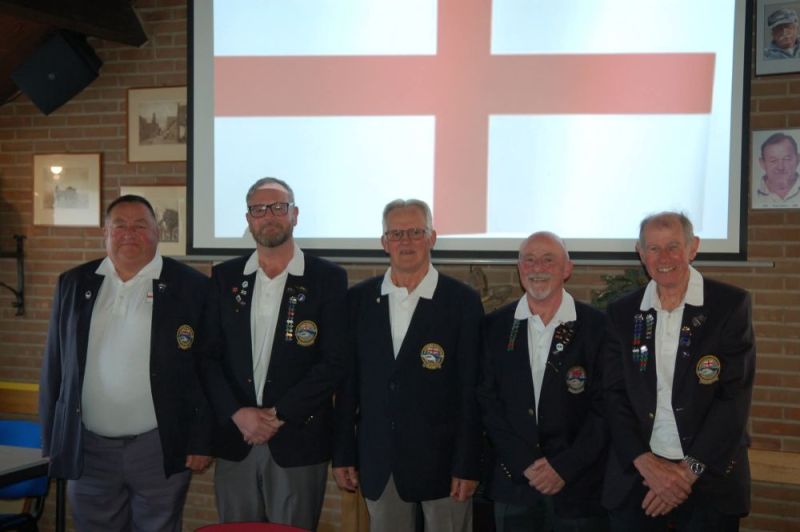
The opening ceremony was held at the local fishing club, where, in traditional fashion, all competing nations were presented alongside their national flags and anthems. During the ceremony, organisers confirmed that conditions at Noordwijk had improved sufficiently for Day One of the championship to proceed on the scheduled beaches. The fishing zones for all three match days were drawn by the team captains.
Day One
Day One fishing remained extremely difficult, with lingering algae still affecting the water conditions. During the opening three hours, only a handful of fish were landed across each zone, resulting in a high number of blanks throughout the competition.
At the close of the first day, the English team found themselves in last place overall after recording two blanks within the squad. Stuart produced the team’s strongest performance, finishing third in his zone under very testing conditions.
Day Two
In an effort to avoid the worst of the algae, organisers made the decision to move the competition further down the beach. This proved to be an excellent call, with catches improving dramatically throughout the day.
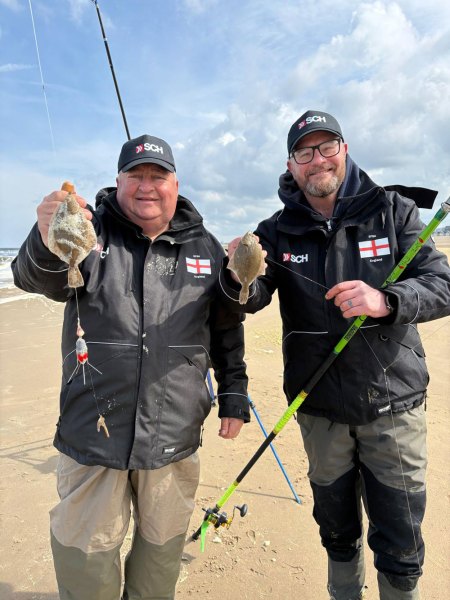
A much greater number of fish were landed, consisting mainly of flounder and bass, along with the occasional turbot. The team’s tactical approach worked exceptionally well, resulting in a series of outstanding individual performances. Kim secured a zone win, Stuart and Andy both finished second in their respective zones, Paul claimed fourth place, and Steve added another second-place finish.
These excellent results lifted the team into fifth place overall heading into the final day.
Day Three
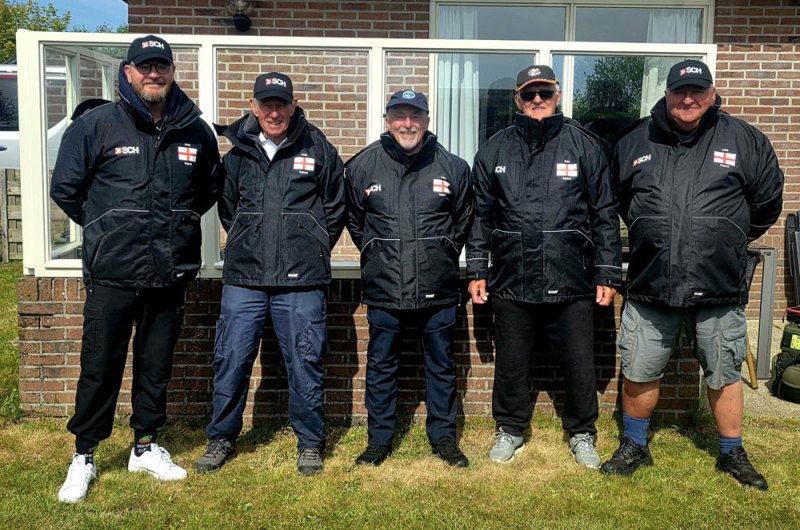
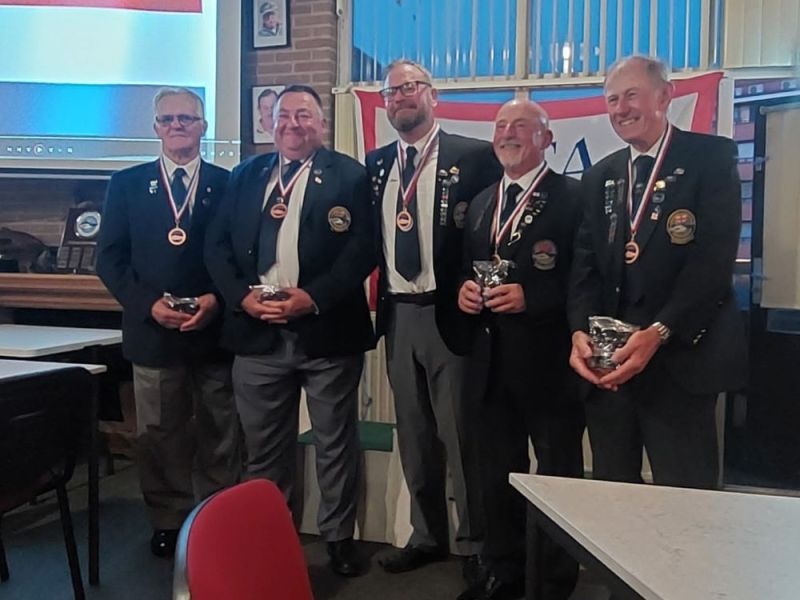
The final day saw the team deliver an exceptional performance under pressure. Three zone wins, combined with two fourth-place finishes, propelled the squad into the bronze medal position overall — a tremendous achievement considering the exceptionally high standard of teams competing throughout the championship.
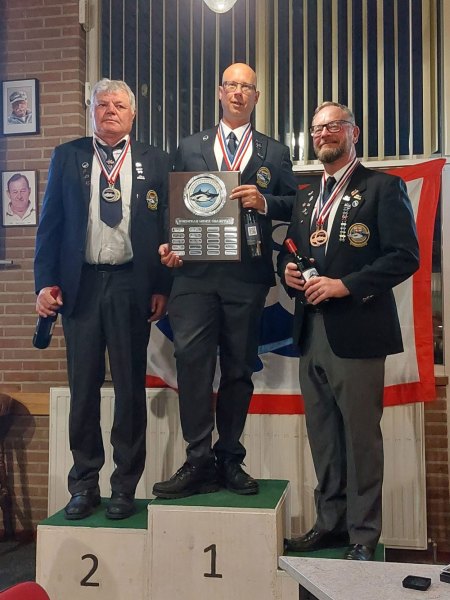
The week concluded with several major successes for the team:
• Team Bronze Medal overall
• Paul Curtice winning Gold Medal in the Over-65 category
• Stuart Jones securing the Individual Bronze Medal
Overall, the championship proved to be a memorable and hard-fought event, with the team showing tremendous resilience after an extremely challenging start to the week.
A huge thank you goes to EFSA Holland for organising another exceptionally well-run international championship.
Results
Gallery